
It's what newborns are built for
For nine months your baby was held, warm and moving. The first few months outside are a transition, and being held is the most familiar way to fall asleep there is.
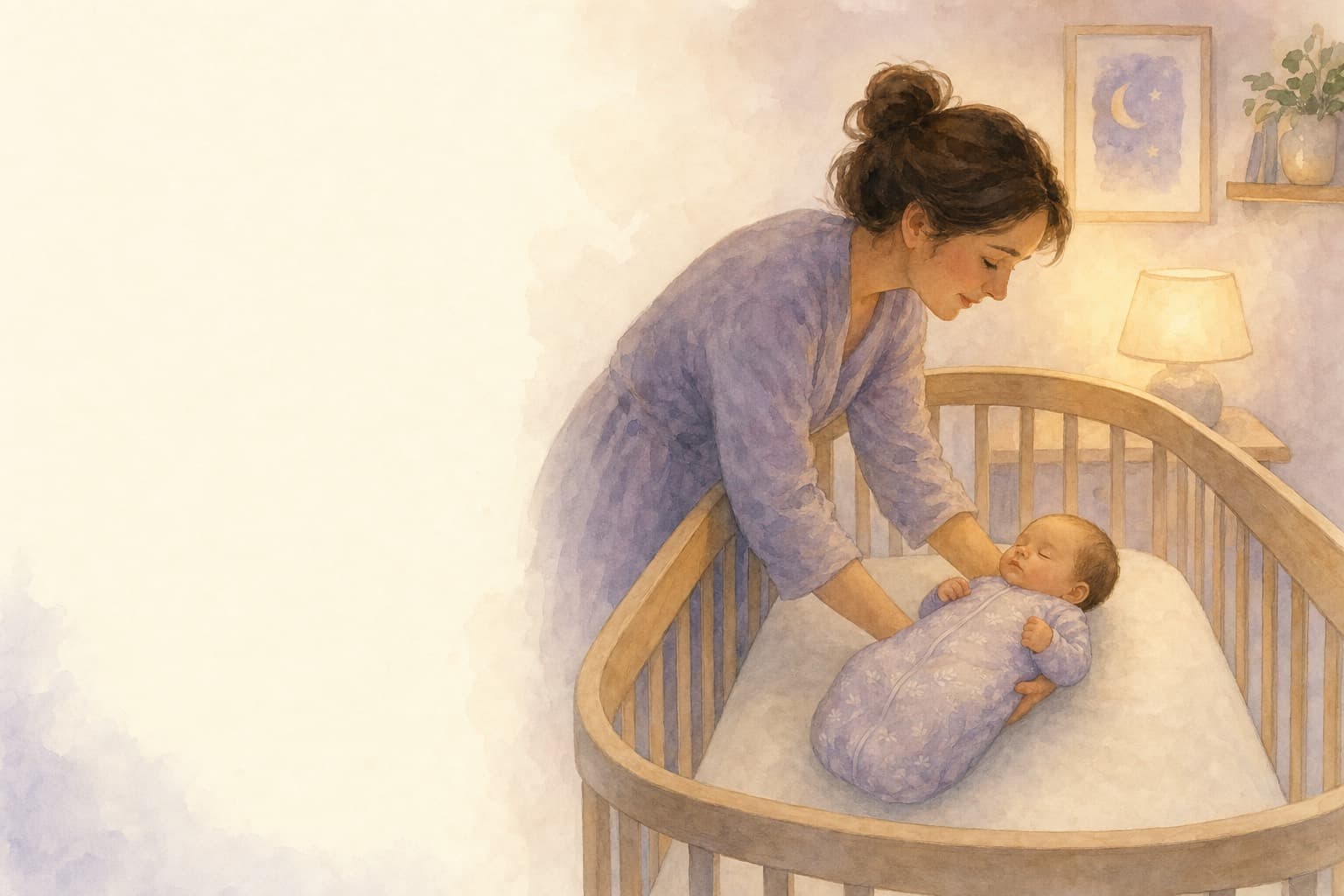
Your baby sleeps beautifully — as long as they're on you. The second you lay them down, their eyes open. It's one of the most common things parents search for in the early months, and there's a gentle, gradual way through it.
Wanting to sleep on you is normal, especially in the first three months: your warmth, movement and heartbeat are what your baby knows. It usually becomes a problem only when it's the only way your baby will sleep. The fix is gradual — wait for deep sleep before you transfer, practise one sleep a day in the crib starting with the easiest nap, and slowly do less of the settling for them.
Get a free plan for your babyFor nine months your baby was held, warm and moving. The first few months outside are a transition, and being held is the most familiar way to fall asleep there is.
Young babies enter sleep through a light, active stage. Put them down in the first ten to twenty minutes and the change in position, temperature and movement is enough to wake them.
In the early weeks, the sudden falling feeling of being lowered can trigger the startle reflex and wake your baby with a jolt.
After three or four months, a baby who has only ever fallen asleep in arms has had no practice falling asleep anywhere else. Not wrong — just a skill they haven't had a chance to learn yet.
Give it 15–20 minutes after your baby falls asleep. Look for limp, heavy arms that flop when lifted, slow even breathing, and no fluttering eyelids.
Warm the crib sheet with your hand before you lay them down, lower them slowly and keep your body close, then rest a hand on their chest for a minute or two before easing it away. Never leave a heating pad or hot water bottle in the crib.
Pick the first nap of the day — when sleep pressure is highest — and try putting your baby down drowsy but awake. Keep the other sleeps as they are while they learn.
Hold until asleep, then until drowsy, then settle in the crib with a hand on their chest, then sit beside the crib, then step out. Small steps, a few days each.
One nap a day on you is not a problem to solve. The goal is a baby who can also sleep in their own space — not one who never sleeps on you again.
The danger with contact naps is you falling asleep too. If you feel yourself getting drowsy, put your baby on their back in their crib or bassinet. Falling asleep with a baby on a sofa or armchair is especially dangerous.
If you might fall asleep while feeding in an adult bed, keep pillows, blankets and sheets away from your baby, and move them to their own sleep space as soon as you wake.
For newborns, a swaddle can calm the startle reflex — stop swaddling as soon as your baby shows signs of trying to roll. Avoid weighted sleep sacks and weighted swaddles.
Answer a few questions about your baby's age, naps, bedtime and nights, and Dormeli builds a personalized sleep plan — what's most likely going on, and the step to start with tonight. Gentle or structured, your choice. Your first plan is free.
Sleep changes are usually developmental, but check with your pediatrician if you notice:
It isn't harmful in the early months, and lots of babies nap in arms. It becomes a problem when it's not sustainable for you, or when your baby can't sleep any other way as they get older.
It varies. Many babies can learn to fall asleep in their own space with gradual practice from about three to four months, and transfers usually get easier as the startle reflex fades.
Safe-sleep guidance says no. If you might doze off, put your baby on their back in their own flat, empty sleep space first — and never fall asleep with your baby on a sofa or armchair.
Usually because they're still in light sleep, or because the drop and the cooler sheet startle them. Waiting 15–20 minutes for deep sleep and warming the sheet with your hand both help.
Dormeli is an AI sleep coach, not a medical provider. This guide is general information, not medical advice; every baby is different.